


.svg)


How Butlr Addresses the Data Center Energy Efficiency Challenge
Heatic™ powered thermal intelligence enables building automation and advanced data center cooling
We are approaching a real, physical limit in the age of AI. As early as the second half of this decade, electricity - not GPUs - becomes the bottleneck for AI growth. Grid expansion, power generation, and transmission are struggling to keep pace with the rapid deployment of AI compute.At the same time, buildings, the largest man-made system on Earth, already account for roughly 37 to 40 percent of global energy consumption, while overall global electricity capacity is growing at only about 4 to 5 percent per year. This mismatch creates a fundamental challenge: the fastest-growing digital systems are constrained by the slowest-moving physical infrastructure.Solving AI’s energy problem will require not just more power generation, but a step change in how efficiently we use the energy we already have. Improving building energy operations by just 10 percent would free up energy on the same order of magnitude as the net new electricity added globally each year through new power plants and solar installations.
AI is driving unprecedented demand for data centers. In turn, it’s leading to a seemingly untenable demand for energy, far outpacing electric vehicles, hydrogen and other emerging sectors when it comes to energy consumption. It is estimated that by 2035, data centers will account for 8.6% of all U.S. electricity demand. This is more than double the current share of 3.5%, according to Bloomberg NEF. Even before the demand for data centers, buildings have been responsible for an estimated 37-40% of global greenhouse gas emissions. To optimize building and operational efficiencies in buildings, especially data centers, Butlr provides advanced data and analytics specifically designed to address these growing concerns.
Thermal Sensors Moderate Temperature, Anticipate Spikes in Demand
While AI demands massive computing power and drives unprecedented energy consumption, Butlr’s thermal-based physical AI sensors can also solve the very problems AI creates. The key lies in moving from assumption-based planning to real-time, data-driven responsiveness in data center operations.
For example, traditional building management protocols condition spaces based on calendars and clocks. HVAC runs on predetermined schedules, often cooling empty server racks while struggling to handle unexpected thermal hotspots. This approach makes sense when workloads are predictable and static. And before the rise of AI.
Today, operational efficiency requires an understanding of the needs of the data center from the perspectives of fluctuating computational demands, variabilities in heat generation, and the impact of humans on energy consumption. Getting that granular data is possible through thermal-based AI sensors that understand changes in heat and human movement indoors without compromising privacy.
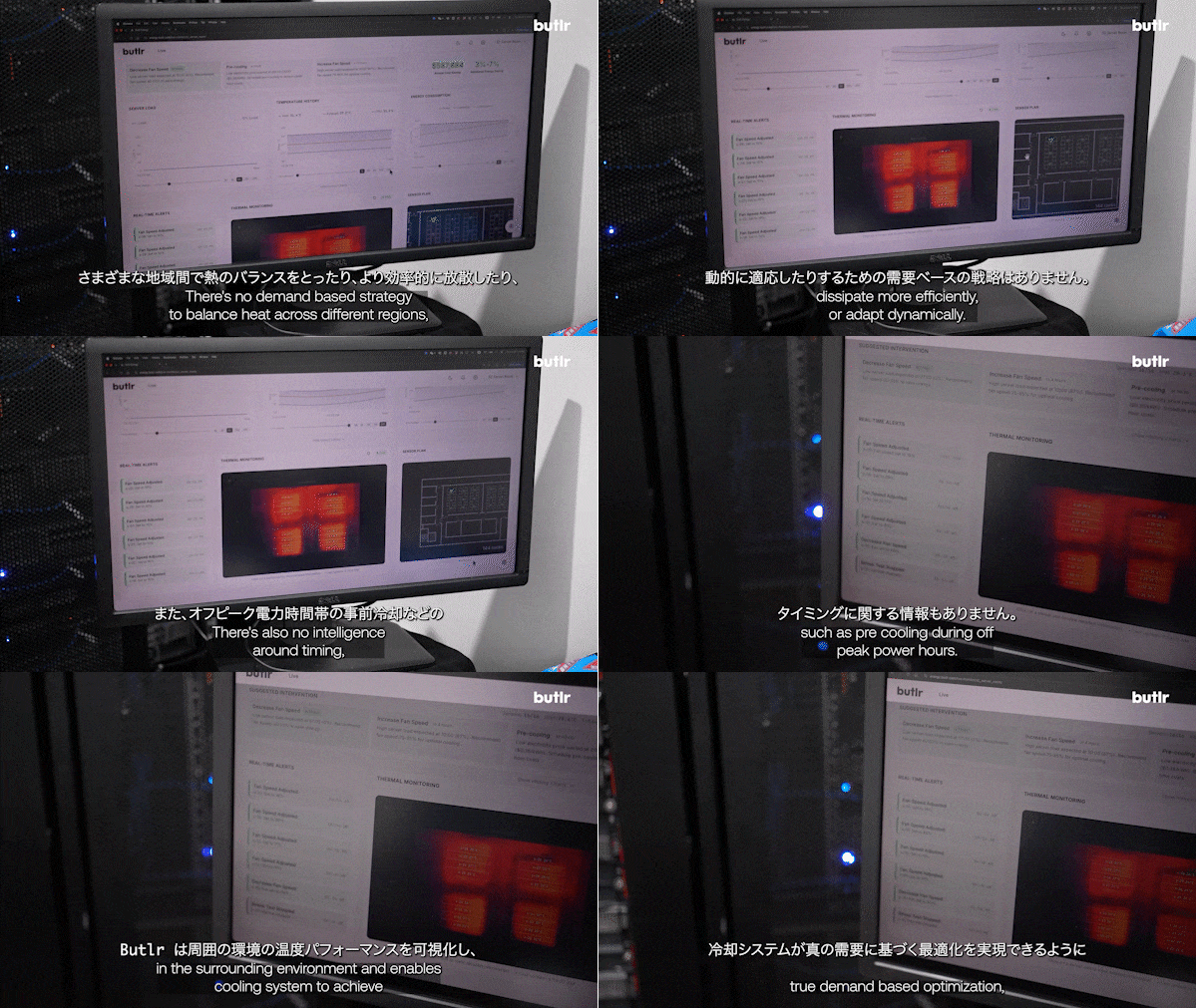
In data centers, thermal intelligence reveals where equipment generates heat, where cooling is wasted on idle infrastructure, and where thermal stress creates operational risk. This granular awareness enables facilities teams to deliver targeted cooling precisely where and when it's needed.
Privacy-first intelligence for the built environment
Butlr provides continuous awareness of heat generation patterns across the data center. This enables cooling systems to respond dynamically to actual conditions rather than worst-case assumptions. In data-adjacent facilities and labs, this approach has already demonstrated significant energy savings while improving thermal safety and infrastructure resilience.
The sensor data can be easily integrated into a building management system to provide a bigger picture view of what is happening in the building, how efficient current systems are, and how to drive even more efficiencies to prevent costly outages that lead to unfavorable customer experiences.
Butlr's approach to optimizing data center heating and cooling systems stems from a fundamental insight that temperature itself can be a rich data source for understanding how people and machines use indoor space.
Our palm-sized thermal sensors feature a multi-year battery life and mount wirelessly to walls or ceilings. Since they are thermal, they are, by design, unable to capture images, audio, or identities. Instead, they detect heat signatures to provide anonymous data on presence, movement, and activity patterns.
Making Buildings Responsive to How They Are Actually Used
One of the most immediate opportunities lies in how buildings run heating, cooling, and ventilation today. Most HVAC systems still operate on static schedules based on calendars and assumptions, not on how spaces are actually used. By using real occupancy data, buildings can align HVAC operation with real demand, adjusting airflow and temperature floor by floor and hour by hour. This shift from time-based control to demand-based operation reduces wasted energy in underused spaces, improves comfort where people are present, and delivers repeatable efficiency gains without requiring major mechanical upgrades.

From Reactive to Responsive Data Center Operations
The future of data center management depends on shifting from reactive to responsive operations. As AI workloads continue to scale and power demands intensify, the data centers that thrive will be those that can align their energy delivery with real-time thermal conditions.
The U.S. Department of Energy warned last July that blackouts could increase 100-fold by 2030. Power-related outages cost businesses approximately $100,000 per hour. Against this backdrop, energy efficiency isn't just about sustainability or cost savings, it's about operational resilience and business continuity.
Butlr's vision is to make thermal intelligence the core infrastructure for data centers to reduce waste and maintain resilience as computational demands continue with unprecedented growth. The technology demonstrates that sometimes the best way to solve AI's energy problem is with AI itself, applied thoughtfully, with privacy and efficiency built in from the ground up.




.webp)