← All resourcesThe State of Commercial Real Estate 2026
The State of Commercial Real Estate 2026
The flagship report on the spatial intelligence gap. Based on a 2026 survey of 400 U.S. commercial real estate, building management, and facilities decision makers, it shows how a lack of reliable usage data costs organizations across workplaces, higher education, corporate labs, data centers, and luxury retail, and how privacy-first thermal sensing closes the gap without cameras.
Full resource coming soon.
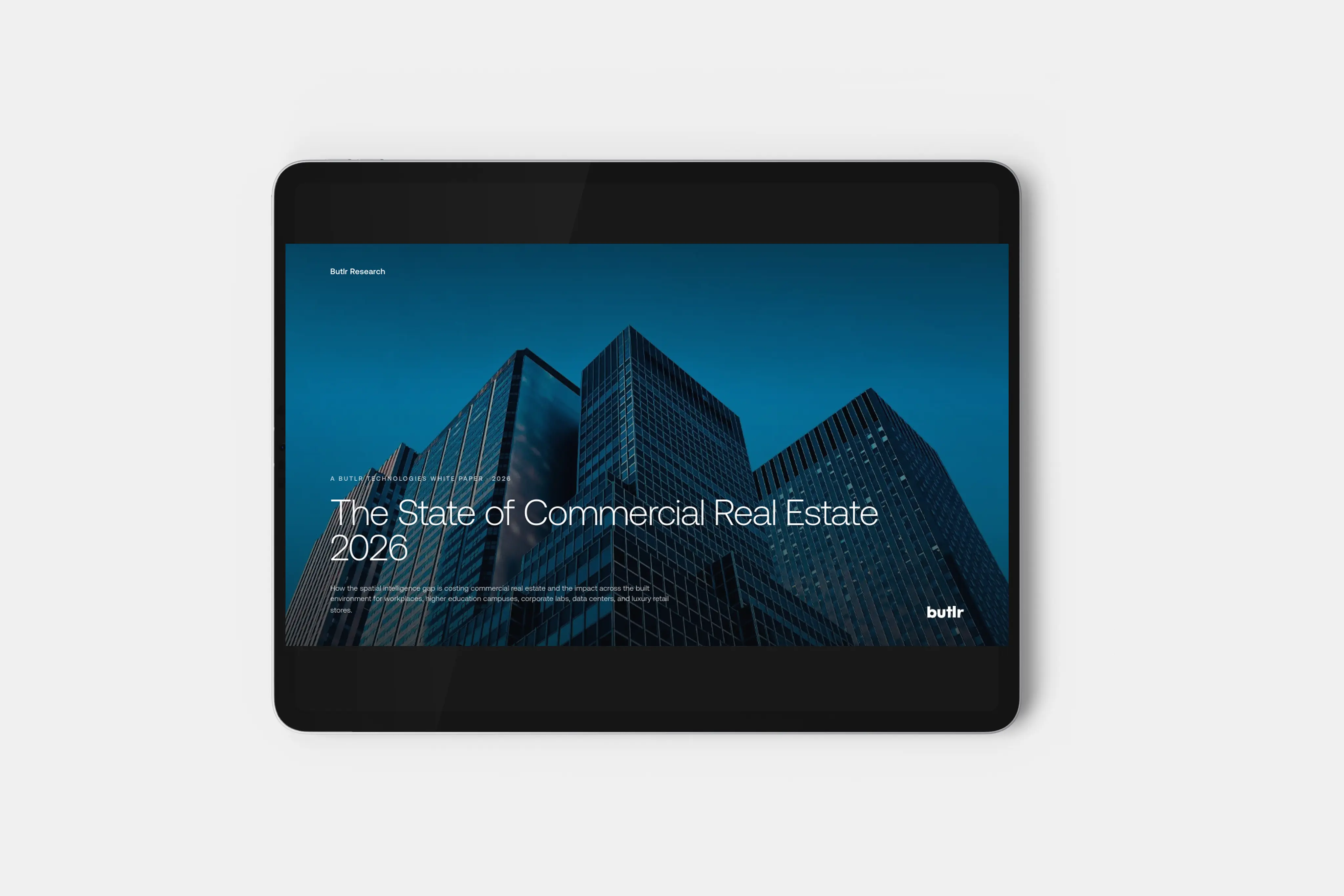
butlrResearch report
The State of Commercial Real Estate 2026
Sense Everyone. See No One. The State of Commercial Real Estate 2026
https://cdn.prod.website-files.com/65af40a4fcb4eb0615fc13b3/6a4387120c79abd27af65c57_Butlr%20Research%20-%20The%20State%20of%20Commercial%20Real%20Estate%202026.pdf
The report at a glance
19%
of space-planning decisions are mostly data-based
99%
have had business plans disrupted by data gaps
87%
call utilization insight a top priority
Inside the report
- How decision makers plan space today, by the numbers
- What the data gap costs in five sectors
- Case studies with measured results
Common questions
What is the spatial intelligence gap?
It is the distance between how much leaders want to know about building use and what they can measure. In a 2026 survey of 400 U.S. decision makers, 87% called utilization insight a top priority, yet only 19% of space-planning decisions are mostly data-based.
How often do data gaps disrupt real estate plans?
Almost always. 99% of surveyed decision makers have had business plans disrupted by data gaps, and 48% recently delayed or canceled renovations.
THE COMPLETE RESOURCE
Get the full resource
Download the complete resource to explore it in detail.
Get the report
→The State of Commercial Real Estate 2026 | Butlr
Survey of 400 US decision makers on the spatial intelligence gap across workplaces, campuses, labs, data centers, and luxury retail.
The flagship report on the spatial intelligence gap. Based on a 2026 survey of 400 U.S. commercial real estate, building management, and facilities decision makers, it shows how a lack of reliable usage data costs organizations across workplaces, higher education, corporate labs, data centers, and luxury retail, and how privacy-first thermal sensing closes the gap without cameras.
the-state-of-commercial-real-estate