


How can a company reduce cafeteria lines at lunch?
This IT services company used Butlr occupancy data to publish a live crowd display, extend cafeteria hours, and adjust layout and staffing, saving each diner 5.6 minutes on average.

Real-Time Visibility to Optimize Cafeteria Experience and Efficiency
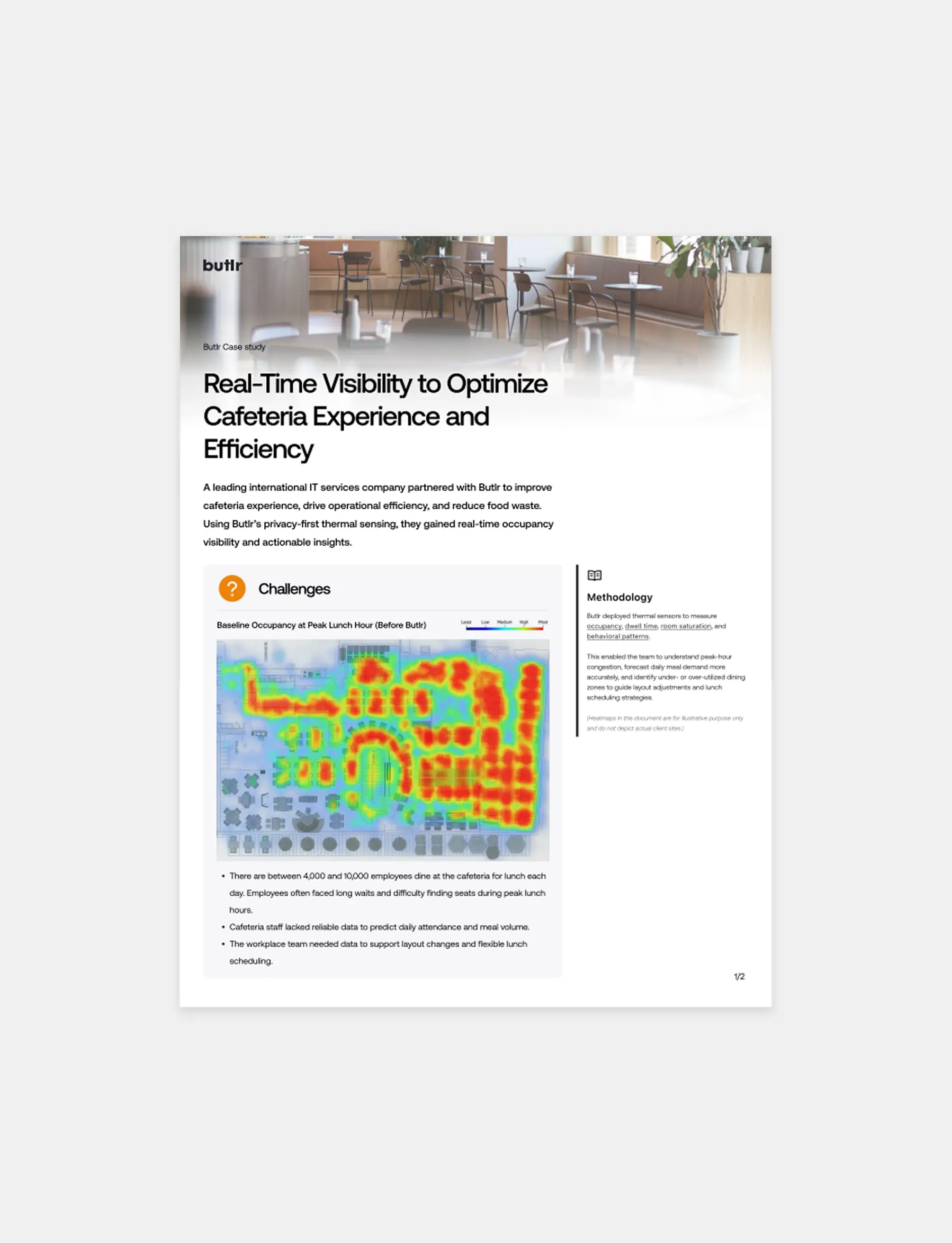
Between 4,000 and 10,000 employees eat lunch at this IT services company's cafeteria every day, and peak-hour lines and full tables were costing time. Butlr sensors measured occupancy, dwell time, and congestion, powering a live crowd display for employees and demand forecasts for kitchen staff. The company extended cafeteria hours, reduced food waste, and saved an average of 5.6 minutes per diner.
Full resource coming soon.
Case study
Real-Time Visibility to Optimize Cafeteria Experience and Efficiency
Sense Everyone. See No One.933
productive hours regained per day (estimated)
5.6 min
saved per diner on average
10,000
employees using the cafeteria daily, at peak
This IT services company used Butlr occupancy data to publish a live crowd display, extend cafeteria hours, and adjust layout and staffing, saving each diner 5.6 minutes on average.
Yes. Usage trends by time and day helped kitchen staff forecast meal volume more accurately and buy less excess food.